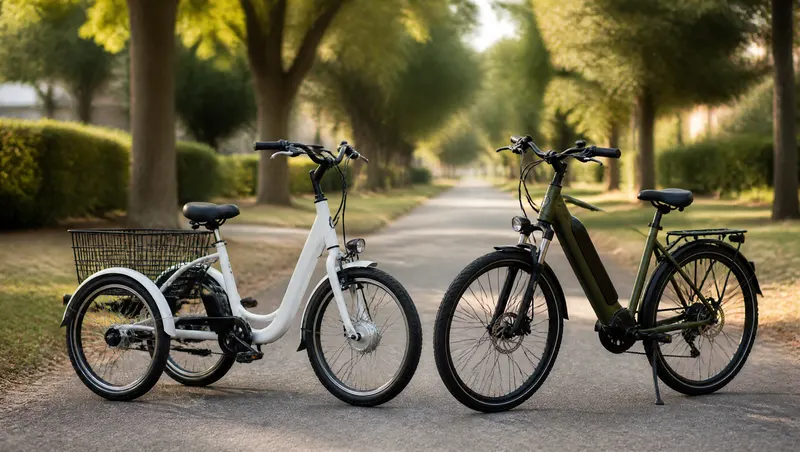
Are Electric Tricycles Safe for Seniors? What Actually Matters
Three wheels solve the balance problem. Here’s how to handle the risks they don’t, from corners to charging.
We earn commissions from paid links. As an Amazon Associate I earn from qualifying purchases. Our picks are based on published specs, certifications and independent reviews — brands don’t pay for placement. Details.
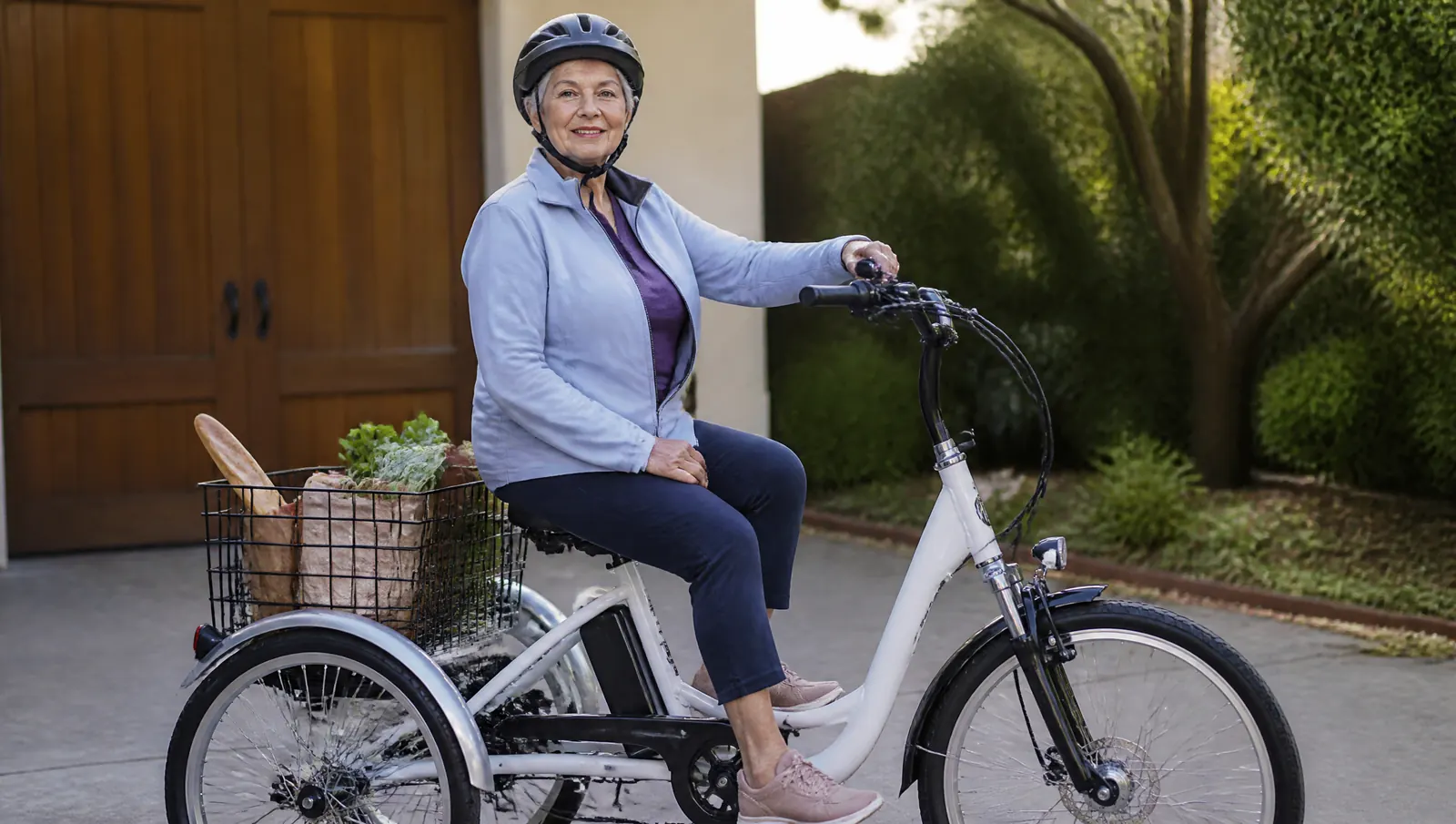
Most people who ask whether an electric tricycle is safe for an older rider are really asking three questions: will it tip over, can I stop it reliably, and is the battery safe in my garage? The honest answer is that a well-chosen e-trike removes the biggest risk of cycling for many seniors — losing balance at low speed — but it introduces a few new ones you should understand before the first ride.
This guide covers what makes a trike stable (and what doesn’t), the features that matter most for older riders, and a simple practice routine. It is general information, not medical advice: if you have balance, vision, heart or joint concerns, talk to your doctor before you start.
Why three wheels help
On a bicycle you have to balance actively, and the slowest moments — starting, stopping, waiting at a crossing — are the hardest. A tricycle stands on its own, so you can stop, sit and set off again without putting a foot down. For riders who stopped cycling because of balance worries, that alone is the difference.
Electric assist adds a second benefit: you don’t have to strain to get moving or climb a grade, which keeps your effort steady and your attention on the road.
Where trikes can tip, and how to avoid it
Trikes have one weakness bicycles don’t: they can’t lean into a turn. Go into a sharp corner too fast and your weight shifts onto the outside rear wheel, which can lift the inside wheel. Three habits prevent almost all of it:
- Slow down before the turn, not during it. Brake on the straight, then steer.
- Lean your upper body toward the inside of the turn. It moves your weight back over the trike.
- Avoid turning across a slope such as a steep driveway or a cambered curb cut. Ride straight up or down, then turn on the flat.
A rear differential and wide tires make a trike corner more predictably, but they don’t change these physics. Speed is the variable you control.
Start slow: beginner modes and assist levels
Most adult e-trikes reach 14 to 20 mph, which is faster than many new riders need. Look for a trike with several pedal-assist levels and a throttle you can ignore at first. Some models go further: Velotric’s Triker has a beginner mode that limits speed to 8 mph, and Lectric’s XP Trike 2 includes a beginner setting too. On any trike, start in the lowest assist level and stay there until turning and braking feel automatic.
Getting on and off safely
Falls often happen at the curb, not on the road. A low step-through frame means you don’t lift your leg high — Lectric lists a 13.8-inch step-over for the XP Trike 2. A seat with a backrest gives support when you sit down and stand up. And check the maker’s rider-height range so the seat goes low enough for your feet to reach the ground comfortably.
Always set the parking brake before you get on or off, and before loading groceries. Unlike a bicycle, a trike doesn’t fall over when you let go, so it will happily roll away on even a slight slope.
Brakes: hand strength matters
Hydraulic disc brakes need less squeeze than mechanical (cable) disc brakes for the same stopping power. If you have arthritis or a weak grip, that’s a meaningful difference — try the levers before you buy if you can, and keep the brakes adjusted. Whatever type you have, practice firm stops in an empty parking lot so you know how far the trike travels before it halts.
Battery and charging safety
Lithium-ion battery fires are rare but serious, and they’re concentrated in uncertified products. Look for UL 2849 certification, the standard that tests an e-bike’s battery, charger and drive system together for electrical and fire safety; New York City requires it for e-bikes sold there. Then follow the basics: use the charger that came with the trike, charge on a hard surface away from exits, don’t charge overnight unattended, and stop using a battery that is swollen, damaged or unusually hot.
Be seen: lights, flags and a helmet
A trike sits lower than a car driver’s sightline expects. Ride with the headlight and taillight on in daylight, add a tall safety flag if you share roads with traffic, and wear bright layers. Several current trikes include integrated brake lights and turn signals. A properly fitted bicycle helmet is worth wearing on every ride, even short ones.
A simple first-week practice routine
- Day 1, empty parking lot: motor off. Practice getting on and off with the parking brake set, then slow straight lines and gentle stops.
- Day 2: lowest assist level. Wide, slow circles in both directions, leaning into each turn.
- Day 3: firm stops from walking pace, then from jogging pace.
- Days 4–5: quiet residential streets or paths at low assist, with a companion if possible.
- After a week: add one assist level at a time, and only use the throttle once braking and turning feel automatic.
Choosing a trike with safety in mind
If safety is your top priority, put these ahead of top speed or motor wattage: a rear differential, a low step-through frame, a parking brake, several low assist levels, integrated lights and UL 2849 certification. Our roundup of the best electric tricycles for adults compares six models on exactly these points, including our top value pick, the Jasion JT18.
Frequently asked questions
Is an electric trike safer than an electric bike for seniors?
For riders who struggle with balance, usually yes: a trike stays upright when you stop or ride slowly, which is when many bicycle falls happen. Trikes have their own risk in fast, sharp turns, so speed control matters more.
What speed should a beginner senior ride an e-trike?
Start in the lowest pedal-assist level and keep to a pace you could comfortably stop from in a few feet. Some trikes offer a beginner mode capped at 8 mph. Increase assist one level at a time as turning and braking become automatic.
Do seniors need a helmet on an electric tricycle?
Helmet laws vary by state and age, but a properly fitted bicycle helmet is worth wearing on every ride regardless of what the law requires.
Can I ride an e-trike if I have balance problems?
Many people with balance concerns ride trikes because they don't require balancing at stops. Talk to your doctor first, start in an empty lot, and choose a model with a low step-through frame, a backrest seat and a parking brake.
Sources
- Velotric Triker product page (beginner mode) — Velotric
- Lectric XP Trike2 750 product page — Lectric eBikes
- Lectric XP Trike2 Review — ElectricBikeReport
- UL 2849, Standard for Electrical Systems for eBikes — UL Solutions
- Local Law 39 enforcement, UL 2849 requirement — New York City Council
- Deaths from e-bike fires declining in NYC after UL standards written into law — UL Standards & Engagement